

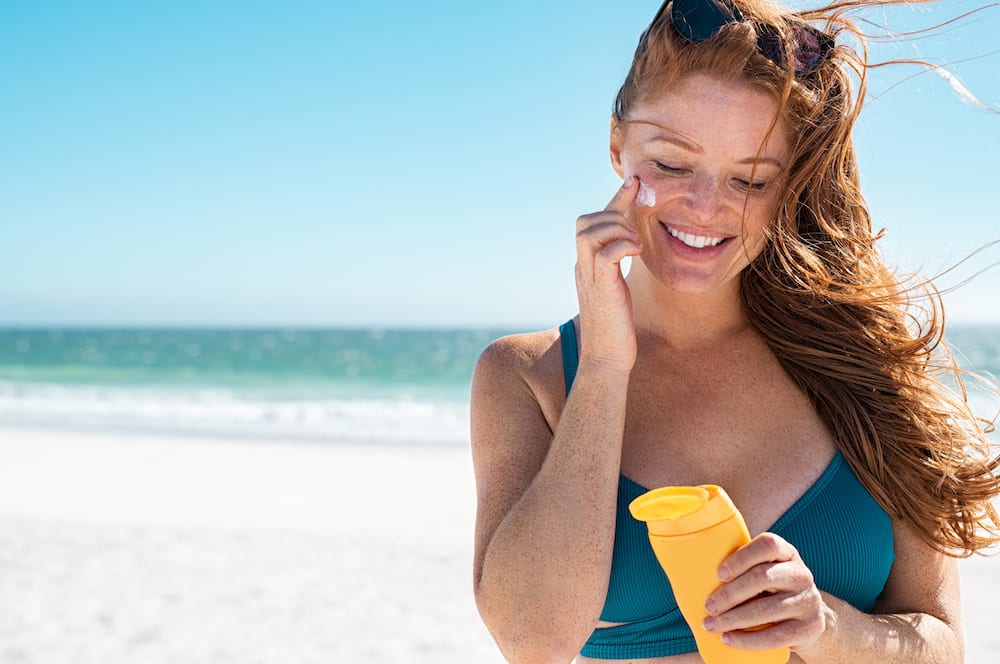
Sunspots are a common type of skin discoloration, typically indicating that excessive exposure to the sun’s UV rays has resulted in skin cell damage accompanied by uneven concentrations of skin pigmentation. They should not be confused with freckles, which are also associated with UV rays exposure but tend to fade when the UV exposure ends.
Lighter-complexions are more susceptible to developing sunspots, but there’s also a genetic component – some people are simply more likely to develop them than others.
Minimizing Sun Exposure
At the risk of stating the obvious, the best way to reduce your chances of developing sunspots is to reduce your exposure to excessive sunlight. You should avoid not only direct high-intensity sunlight but also lower-intensity sunlight, even on cloud-covered days. The UV light that causes sunspots is present on sunny and on cloudy days and can also be intensified when reflected off surfaces such as water, snow, or sand.
Minimizing sun exposure is best achieved by applying a high-SPF rated sunscreen, in combination with wearing sun visors (or loosely fitting hats), sunglasses, and by ensuring that vulnerable body areas are covered by clothing.
Overheated skin is also more likely to develop sunspots, even without direct sunlight exposure. You can use ice, cool water, and even frozen food bags to cool your skin if it’s uncomfortably hot. Water sprays are a particularly effective way to cool down quickly.
Applying Skin Protection
Basic high-SPF sunscreen products are highly recommended, but some products also contain antioxidants that can help to counteract some of the damaging effects of sunlight. Hydrating skin products should also be used to help minimize skin damage – hyaluronic acid-based products are particularly effective at counteracting the dehydrating effects of sun and heat exposure. Some products also combine skin moisturizers with high-SPF sunscreen protection. Your doctor or dermatologist should be able to provide advice on the best product for your skin type and lifestyle.
And if you use sunscreen and/or moisturizer, don’t forget that they need to be re-applied regularly during the day.
Healthy Diet Options
Eating a balanced and healthy diet is, of course, a great idea, whether or not you spend any time in the sun. But there’s some evidence that eating a nutritious diet that contains a variety of antioxidants can also improve your body’s ability to resist and recover from damage caused by excessive sunlight exposure.
Skin Damage Repair
Aloe Vera is a natural product that has been used for generations as a way to help maintain healthy skin, as well as assisting it to recover from damage caused by too much sunlight. It can help reduce discomfort caused by sunburn, as well as dry or irritated skin caused by other irritants.
Your Laser Skin Care
Your Laser Skin Care practitioners are medically qualified and highly experienced in performing non-invasive cosmetic procedures to treat sunspots and other skin imperfections. These can include laser and/or pulsed light treatments and a variety of chemical peels. We can provide expert advice on the best techniques to address your particular situation and will be happy to answer any questions or concerns you have. We also have extensive experience with a wide variety of other non-invasive cosmetic procedures and can help you choose the safest, most effective, and most cost-effective way to achieve your cosmetic goals. Call us at (323) 525-1516 to schedule a free consultation, or visit us online for more information.