

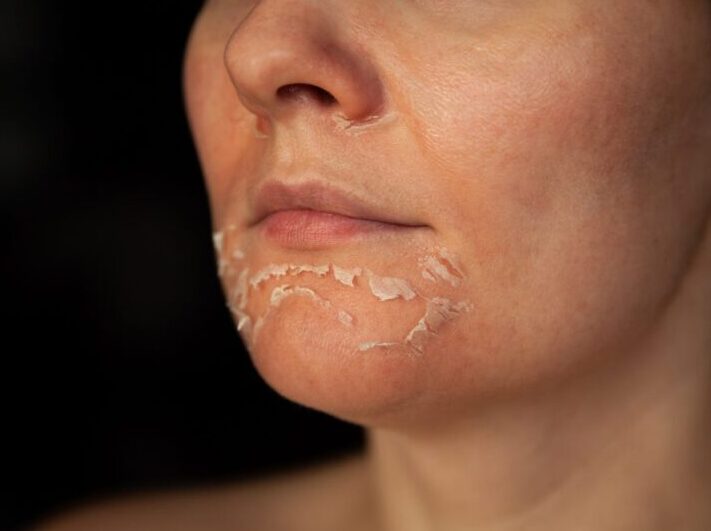
Chemical peels come in many different types and strengths. Essentially they all work by removing the outer layer of your skin – this helps to remove surface fine lines, blemishes, and uneven pigmentation, while revealing the undamaged skin beneath. Some chemical peels are quite mild, while others can be far more aggressive. The stronger the peel, the more care that must be taken when healing afterward.
It’s very common to experience side effects during and after a chemical peel session. These can include a temporary tingling or even burning sensation, as well as itching, dryness, peeling, or other signs of irritation. It’s rare to expose a new layer of fresh skin without experiencing at least some of these symptoms.
Our recommendations for minimizing side effects while encouraging healing fall into these categories:
Minimize Sunshine Exposure
Excess sunshine can damage your skin at the best of times, especially after a chemical peel when the outer protective skin layer has been removed. You should be sure to apply sunscreen regularly during the day and try to avoid direct sunshine. This applies even in the winter months when the sun’s rays can still cause damage. You should continue to use sunscreen for at least several weeks after treatment; we recommend using it on a daily basis, even after you’ve fully healed.
Treat Your Skin with Care
You should avoid anything that could irritate your skin while it’s healing. Your skin will be extra sensitive, and more easily damaged than normal. Avoid hot (and even warm) water when washing, don’t use harsh soap, and pat (don’t rub) your skin dry afterward. It’s best to avoid soap altogether and use a soap-free cleanser instead. Finally, wait a few days before even thinking about exfoliating.
Avoid Strenuous Activities
Anything that boosts your blood circulation can exacerbate any negative side effects that you’re experiencing. Try to delay any strenuous workouts for a couple of days.
Moisturize and Hydrate
You should use a moisturizer, and maybe get extra protection by switching to a thicker one than you normally use. Staying well hydrated is also very much recommended. Follow your practitioner’s recommendations – it’s possible they may recommend minimal use of a moisturizer immediately following the procedure.
Let Your Skin Heal Naturally
You’ll probably want to speed up the peeling that occurs after treatment. Don’t do it! Picking or rubbing your skin will expose the skin layer underneath before it’s fully healed, and risks lengthening the normal recovery time. In the worst case, you could even expose yourself to infection by doing this. Best to apply moisturizer regularly, and be patient while your skin peels naturally.
Other Things to Avoid
Delay using other skin care products until your skin has fully healed. Try to avoid unnecessary touching of the treated areas, and if you had a chemical peel on your face consider pulling your hair back to minimize any chance of irritating your skin with your hairbrush.
Your Laser Skin Care
Your Laser Skin Care can provide you with the expert advice that is needed before deciding on any treatment using chemical peels. We have extensive experience using chemical peels, as well as many other non-invasive cosmetic procedures, and can help you choose the safest, most effective, and most cost-effective way to achieve your cosmetic goals, including how best to combine different procedures when appropriate. Call us at (323) 525-1516 to schedule a free consultation, or visit us online for more information.